How Will USA Greenland Tariffs Affect UK Small Businesses? And how business owners should react.
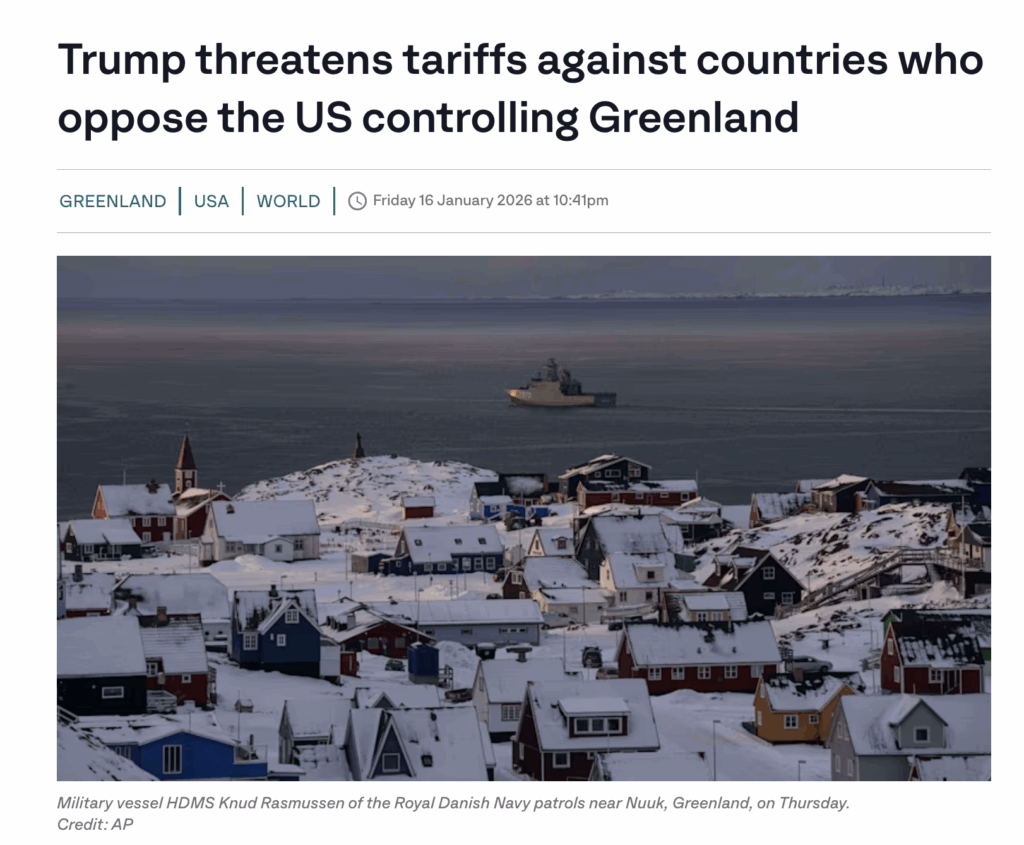
Recent headlines have been dominated by Donald Trump’s use of aggressive negotiating tactics, particularly around tariffs. Markets have reacted sharply, with stock prices falling and German car manufacturers taking notable hits due to their heavy reliance on exports.
This isn’t a political commentary, nor is it about whether you agree with Trump’s approach to global politics. What it is about is something far more relevant to UK small and family businesses: how external forces can suddenly shock the business environment—and what you can do when they do.
Tariffs are just one example. If these threats become reality, the impact could ripple far beyond borders. You might not export directly to the US, but what if your business sits somewhere in the supply chain of a major car manufacturer? Or what if another global event—political, economic, or environmental—emerges entirely outside your control?
Uncertainty is unavoidable. Leadership response is not.
How UK Small Businesses Can Respond to Tariff Uncertainty
Here are five grounded principles to help business owners and leaders navigate disruption—whether from tariffs, geopolitical tension, or industry-wide change.
- 1. Start With the Right Mindset: As a business owner or leader, your mindset sets the tone. Negativity won’t remove the hurdle ahead. If disruption is coming, you either prepare to jump it—or risk being tripped by it. A calm, open, and solution-focused mindset is the foundation of resilience.
- 2. Communicate Clearly With Your Team: If you’re worried, your team will sense it. Silence breeds anxiety. Clear, reassuring communication builds trust. Be the steady presence through uncertainty. When people feel supported, they’re far more likely to contribute ideas and solutions you may not have considered. Strong leadership turns uncertainty into collective problem-solving.
- 3. Stick to the Facts: Periods of change often invite hysteria—rumours, half-truths, and exaggerated worst-case scenarios. Resist that noise. Anchor your decisions in verified facts, not headlines designed to provoke panic. Respond only to what you know to be true.
- 4. Avoid Knee-Jerk Decisions: Pressure can push leaders into rushed choices that feel decisive in the moment but cause regret later. Measured responses beat reactive ones. Assess what the facts mean for your business specifically, then act with intent—not impulse.
- 5. Create a Plan—and Act on It: Write a plan and share it with your team. No leader sees everything clearly; blind spots are part of the job. Inviting input strengthens the plan and builds ownership. Once aligned, take action early. Don’t wait until the hurdle is already at your ankles.
Change, whether driven by tariffs, world politics, or industry disruption, is part of modern business life.The businesses that survive and grow aren’t those with the most control over events, but those with the strongest leadership response.
I hope this helps family and small businesses preparing for uncertainty ahead.
For more advice and practical insights on running and leading a family business, follow us on social media and share your thoughts.